Discovery: The Foundation of Every Successful Cloud Migration
Wednesday
01 July, 2026
1460 Hits
Discovery: The Foundation of Every Successful Cloud Migration
Technology Trends
Cloud migration projects often focus on the destination: modern infrastructure, improved performance, reduced costs, and increased agility. However, the success of any migration is determined long before the first workload is moved. It begins with discovery.
Discovery is the process of gaining a comprehensive understanding of the existing environment to create a well-informed migration strategy. Rather than relying on assumptions, organizations use discovery to gather accurate data about their infrastructure, applications, dependencies, and resource utilization. This knowledge forms the basis for planning, risk mitigation, and informed decision-making.
Why Discovery Matters
Skipping or rushing the discovery phase can lead to unexpected costs, application downtime, compatibility issues, and project delays. A thorough discovery process ensures that migration decisions are backed by real operational insights instead of assumed estimates.
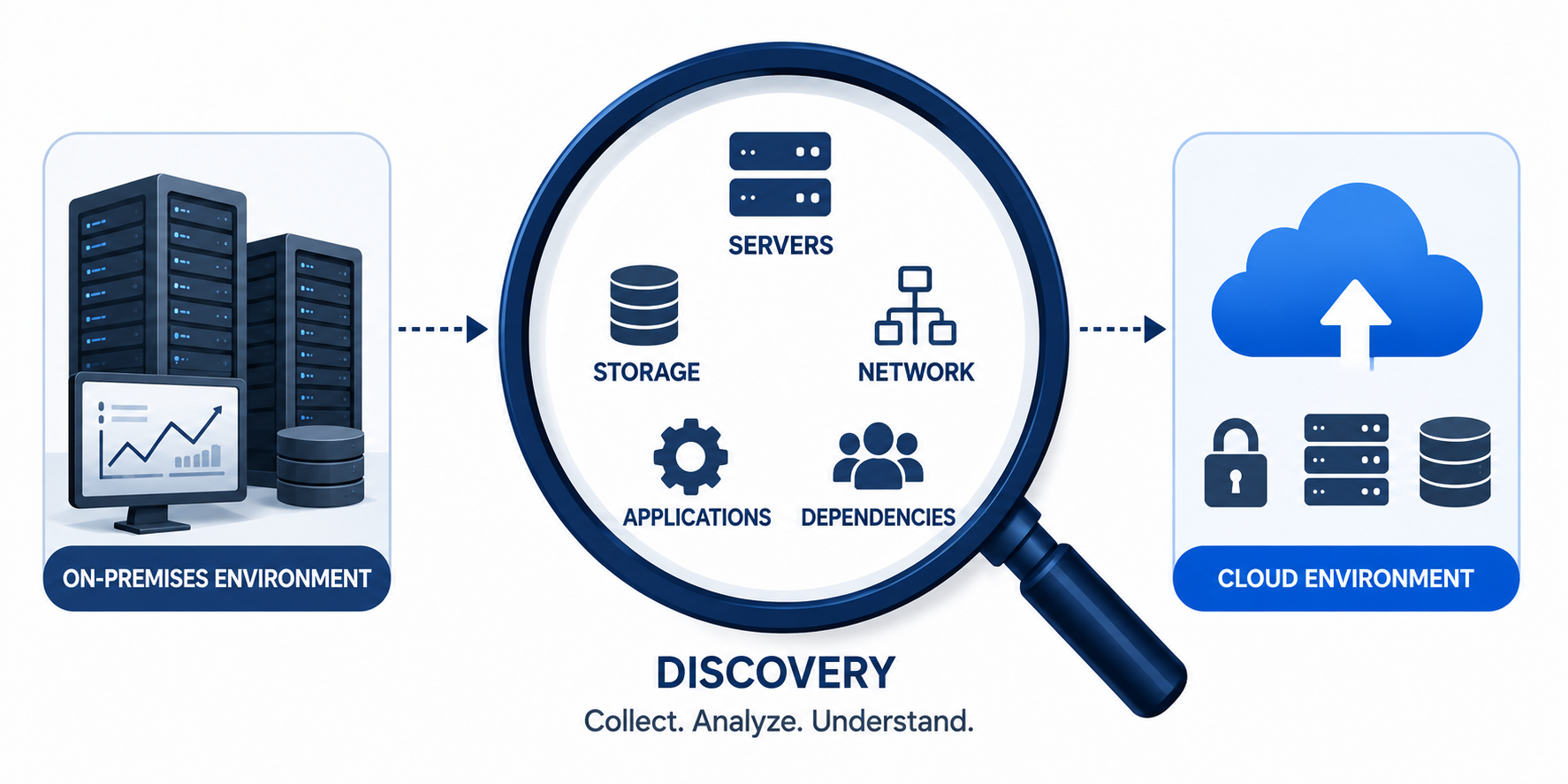
By understanding the current environment, organizations conducting a migration can confidently determine what should be migrated, how it should be migrated, and what resources will be required.
Key Goals of the Discovery Phase
1. Determine Resource Requirements, Sizing, and Compatibility
The first objective of discovery is to analyze existing workloads and identify the compute, storage, networking, and software requirements needed in the target cloud environment. This assessment helps answer critical questions:
- How much CPU and memory do workloads actually consume?
- What storage capacity is required?
- Which operating systems and applications are supported?
- Are there hardware or software dependencies that need attention?
Proper sizing prevents both over-provisioning, which increases costs, and under-provisioning, which can affect application performance.
2. Design the Target Environment
Discovery provides the information needed to architect a cloud environment that aligns with business and technical requirements. This includes designing:
- Virtual networks
- Security architecture
- Identity and access management
- High availability and disaster recovery
- Storage strategies
- Application placement
Instead of simply recreating the on-premises environment in the cloud, organizations can optimize workloads for improved scalability, resilience, and operational efficiency.
3. Estimate Resource Costs
One of the most valuable outcomes of discovery is accurate cost estimation. By analyzing workload utilization and infrastructure requirements, organizations can forecast:
- Compute costs
- Storage expenses
- Network usage
- Licensing requirements
- Backup and disaster recovery costs
Accurate estimates allow stakeholders to build realistic budgets and avoid unexpected spending after migration.
4. Improve Planning and Reduce Risk
Migration projects involve multiple moving parts, including applications, databases, networking, security, and business processes. Discovery helps identify potential risks early, such as:
- Unsupported software versions
- Application dependencies
- Performance bottlenecks
- Network constraints
- Compliance requirements
Addressing these challenges before migration significantly reduces project risk and minimizes service disruptions.
5. Prioritize Virtual Machines for Migration
Not every workload should be migrated at the same time. Discovery enables organizations to classify and prioritize virtual machines based on factors such as:
- Business criticality
- Resource utilization
- Technical complexity
- Application dependencies
- Migration readiness
This prioritization supports phased migration strategies, allowing organizations to begin with lower-risk workloads before moving mission-critical applications.
Discovery as a Strategic Advantage
Discovery is far more than an inventory exercise; it is a strategic planning phase that enables organizations to make informed migration decisions. With comprehensive visibility into the existing environment, teams can design optimized cloud architectures, estimate costs with confidence, reduce migration risks, and establish a clear roadmap for execution.
Whether migrating a handful of applications or an enterprise-scale data center, investing time in discovery lays the groundwork for a smoother, more predictable, and more successful cloud transformation.
Conclusion
Every successful migration starts with understanding what exists today. Discovery provides the insights needed to size resources accurately, design the target environment, estimate costs, minimize risks, and prioritize workloads effectively.
Organizations that invest in a comprehensive discovery phase are better equipped to execute migrations efficiently, control costs, and achieve their long-term cloud objectives. In cloud migration, discovery isn't just the first step; it's the foundation upon which every successful migration is built.
This blog's content is intended solely for informational purposes. While every effort is made to ensure accuracy, completeness, and relevance, the information may not be current or applicable in all situations. The opinions expressed are solely those of the author and do not reflect the views of any organization they may be affiliated with.